
海南山竹
| 发表时间:2012-08-02 18:11:26 | 评论:4 |
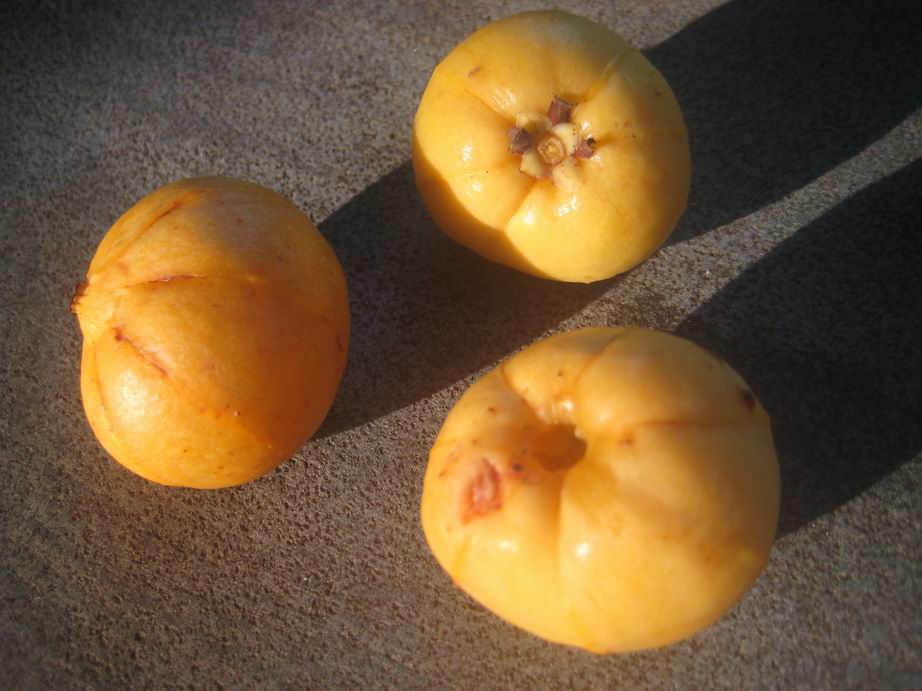
海南山竹,大乔木,树叶椭圆形,果实呈球形。果实尚未成熟时为嫩绿色,成熟后逐渐转为橙黄色。黄色果肉,酸里带甜,略有苦涩。一般来说,山竹需要树龄10年以上才能够开花结果。我们家里的山竹树是从2007年底从野外移植过来的老树,今年是移植之后第一次结果,大概有十多个的样子。
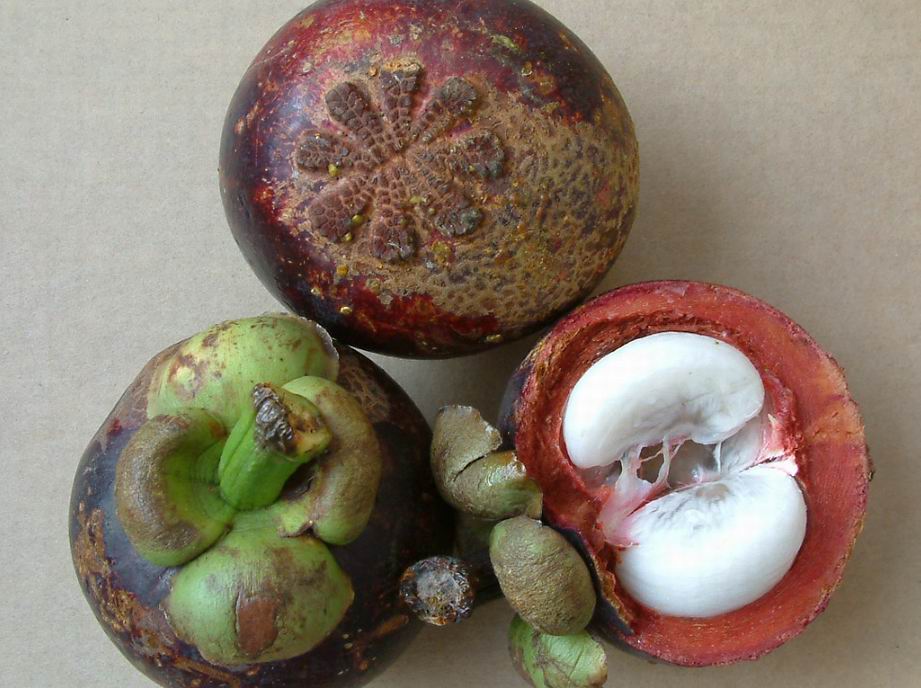
上图是市面上铺天盖地地卖的山竹,虽然号称是海南山竹,其实原产东南亚,只是最近才引种到海南的品种。这个果子的果皮较厚,呈黑褐色,白色果肉,甜中略带酸味。
子豹送快递
| 发表时间:2012-07-31 08:37:04 | 评论:2 |

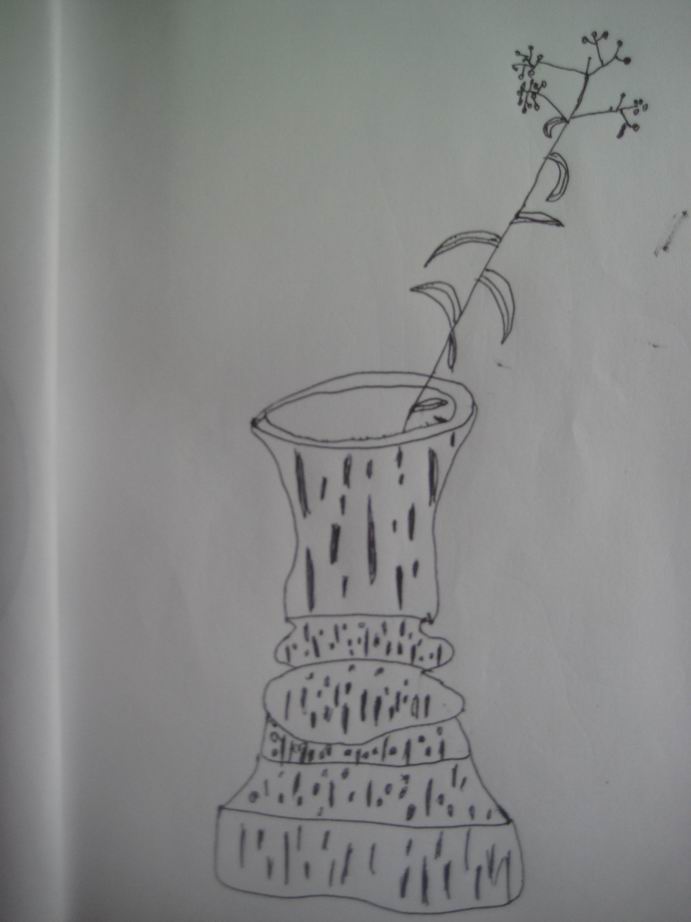
7 月21日北京下暴雨那天,爱多艺国际艺术教育中心的王子豹老师和李鹏歌老师在暴雨中背着婉清在从地铁站安全送回管老师家里。第二天,婉清在涂鸦的时候,管老师问:“你能否把昨天老师送你回来的场景画出来呢?”婉清就画了上面这幅《子豹送快递》。豹子(王子豹老师)驮着小羚羊(婉清自己),鸽子(李鹏歌老师)衔着一片小树叶挡雨。那片遮风挡雨的巨大的树叶,是管慧丹老师温暖的家。大叶子下面的母鹿是管慧丹老师,小鹿是管老师的娃娃大千……
开始画的时候,没有考虑到水很深,把母鹿的位置画得太低了。婉清灵机一动,在中间画了台阶。她把水滴画到水里去了,管老师问:“难道滴下来的雨滴和地上雨水是两种液体吗?为什么不相融呢?”婉清想了想,就把水滴涂成鱼。婉清极力要求管老师命名,于是管老师说:“叫做《豹子送快递》吧,我是收件人。”婉清很高兴,甘当包裹。
婉清的画,大都是有故事的。她的画虽然笔迹稚嫩,但是充满了想象力和创造力。例如《妆成每被秋娘妒》 是白居易的长诗《琵琶行》里面的情景,《大火的书》是火的来历和演变,《阿里米斯里和伊宰尔图》是《一千零一夜》里面的故事,《翻跟头的小女孩》起源于杨丽萍的孔雀舞,等等等等。我最喜欢的,还是她快满五岁时画的连环画《将进酒》和《寻隐者不遇》。有人说小孩子背古诗大都是机械记忆,虽然背得下来,但不是真懂。从婉清的画里,我们欣慰地看到她是真的懂得了《琵琶行》,懂得了《将进酒》,懂得了《寻隐者不遇》。
谢谢管慧丹老师给婉清的画拍下照片。再次感谢王子豹老师和李鹏歌老师对婉清的照顾。
特别的假期
| 发表时间:2012-07-30 21:21:36 | 评论:0 |
7 月8 日到13日,我到北京出差,顺便带上婉清去换新护照以及洗牙。11日那天,和婉清坐在出租车上,想起婉清特别喜欢小时候(嗯,3 岁!)给她上奥尔夫音乐启蒙课的管慧丹老师,便给管老师打了个电话。管老师听说婉清在北京,特别开心,马上就问是不是可以呆到28号,说是她们正在排练一场儿童音乐剧,希望婉清能够参加。我们其实早就订好了13日回程的机票,但是12日那天我有重要的会,便临时将婉清放在管老师的爱多艺国际艺术教育中心,跟着那里的小孩子们玩一天。那天下午,管老师发了个短信给我,说是老师们都非常喜欢婉清,希望婉清能够留在北京参加排练,剧组会安排专门的老师照顾婉清的生活。我跟咪咪又是开心,又是犹豫,最终还是决定我自己飞回海南,让婉清一个人留在北京。
为了照顾好婉清,剧组最终决定让婉清住在管老师家里。管老师自己的孩子还很小,又要照料婉清的日常生活,想来一定非常辛苦。管老师非常疼爱婉清,就像是自己的亲娃一样。她在微博里贴婉清和她家孩子的合影,说:“3年不见,婉清一眼就认出我了,特别亲切,好像天天见面的朋友一样。这几天,带着她和儿子,像是多了个儿女。她会用意大利语、日语、英语……歌唱,会随时和我即兴唱二声部,语言表达能力超强,自信、智慧、有创造力、天性十足,是个十分幸福的孩子。她和大千一见如故,看他们昨天晚上初次见面的舞蹈吧。”

在家里,婉清是个很有主见的孩子,个性也非常硬。譬如说,叫她要经常喝水吧,她总是偷偷把水倒掉。但是在她所敬仰的管老师面前,就完全是另外一个样子。管老师在微博中说道:“她是属于能闹能静的小朋友,看我在写文章就自己去看书了。前天晚上踢被子早上起来有点咳嗽,自己非常自觉,一天喝10杯水,中午睡两个小时。 到今天就没事了。”我们之前对婉清,左看右看总是不够满意,如今看来未免是过分了点。等娃娃回来之后,要多多鼓励,好好心疼。

管老师在幼儿教育方面,真是非常的用心。"因为婉清最后几天感冒嗓子哑了,我一直没有带她去玩,每次她要傻闹、尖叫时,我都毫不客气地让她去坐着练琴、喝水……她一直觉得很委屈,哎!这几天积攒的能量,表演时全都释放出来了。由于演出改时间,和婉清对戏的演员没能来,只好我上台了,和婉清合作很默契……每个宝贝都让人感动,最小的演员——4岁的小米,她演一朵小花,第一场,一直把自己种在台上不动。7岁的马英哲,竟然把下午5点彩排才改的台词记得这么清 楚,美美和婉清的唱段让人感动……婉清的姥姥昨晚把她接走了,演出结束后,她一直在哭,也许是想小朋友,也许是想老师们,也许……。"
晚上给婉清打电话,婉清非常想念各位老师。谢谢管老师以及爱多艺国际艺术教育中心的各位老师,你们非常意外地给了婉清一个特别的假期,也让我们重新认识到婉清的优点和天赋。
下面是爱多艺国际艺术教育中心发布的排练总结(文中的佳佳是婉清的小名)。没有能够到现场看婉清和其他小朋友们的表演,我们都急不可耐地等着视频啦。
(21日北京暴雨那天,爱多艺国际艺术教育中心的两位老师在暴雨中背着婉清在从地铁站安全送回管老师家里。谢谢你们!)

北京真的排水能力过强吗?
| 发表时间:2012-07-26 13:53:25 | 评论:0 |
北京的暴雨过后,给排水专业的guohaizao学长(本文称为郭学长)在水木社区发表了一个帖子,认为北京内涝的原因是排水能力过强。对此观点,本人表示不能赞同。
郭学长在文章的开头,引用了2011年局部修订版的《室外排水设计规范》(GB50014-2006)中《3.2 雨水量》一节关于雨水量的计算公式,指出“雨水流量是汇水面积、区域的汇流系数以及设计暴雨强度这三者的乘积,所谓的提高设计标准,意思就是设计暴雨强度公式中的P 值,也就是设计重现期是1 年、3 年还是5a的区别”。郭学长进一步认为,提高设计重现期(例如将1 变成3)不能够解决低洼积水问题,因为“在同样的暴雨强度下,上游排水、汇水极为迅速高效,在很短的时间内,他就能把大量的雨水排到了下水道,立交桥下低洼点出,你铺设再大的管径都没有用,因在下游,都给迅速增多的,其他地方迅速派来的水给占了”。
在如上论述的基础上,郭学长进一步得出结论:“所以结果就是:你雨水管网的标准普遍越高,上游汇水收集越易越快,历时越短,你低洼处雍水积水就越频繁。”
郭学长这一段推理,貌似逻辑清楚、论据充足,实际上暴露出来的是我国给排水工作者普遍的困惑:2011年局部修订版的《室外排水设计规范》(GB50014-2006)虽然规定了设计暴雨强度和径流系数的计算方法,却没有明确规定汇水面积的计算方法。
严格来说,雨水管道的汇水面积应该按分水线来计算。以北京市的地形地貌来估算,市政道路两侧500米范围内的雨水需进入市政雨水管道。按照这样的计算方法,当排水管道的长度达到1 公里时,就需要直径为2 米的排水管道。由于建设成本较高,现实中基本上都是按道路周围100~200米范围进行计算。
更为重要的是,汇水面积不是一个点的概念,而是一个面的概念。如果某地段地处下游,其汇水面积应该是上游所有可能汇水面积之和。根据相关报道,7 月21日夜间广渠门桥积水深度达到4 米,如果以平原地区常用的千分之三到千分之五的排水坡度来计算,广渠门桥地区道路两侧1000米范围内的都需要计算到汇水面积中。郭学长的文章正确地指出:“为什么下游会灌得这么快呢?很简单,上游的排水能力实在是太强了,汇水多,历时短,流量大......但是,这么强大的上游雨水排除能力,恰恰是低洼地区积水的重要原因。”
郭学长的错误,在于他把上游和下游明确区分成两个相互独立的点,而不是相互联系的面。这位长期从事给排水专业的学长,没有意识到下游的汇水面积是上游所有可能汇水面积之和。
可以这么说,目前北京的道路排水设计,有没有达到2011年局部修订版的《室外排水设计规范》(GB50014-2006)的要求还是个问题,根本不存在所谓排水能力过强的问题。
值得注意的是,广渠门桥紧挨南护城河。郭学长的文章正确地指出“广渠门桥,离南护城河比较近,河道水位过高,造成雨水管道满溢,下游排水不畅”并进一步指出“下游倒灌,客水进入,喧宾夺主”是当天晚上广渠门桥积水的根本原因。这说明大城市的排水工程是一个系统工程,不应该简单地引用《室外排水设计规范》(GB50014-2006)进行设计,而应该根据2000年发布的的《城市排水工程规划规范》(GB50318-2000)进行全局考虑。在此基础上,引入小流域的概念进行综合治理。城市排水的目的绝不是简单地从高处排往低处,而是从城里排往城外,最后安全地分散到整个大流域。
可惜的是,虽然《城市排水工程规划规范》(GB50318-2000)已经发布十年有余,但是至今基本上是一纸空文。郭学长虽然长期从事给排水专业,在其论述中也始终没有提及这一规范。

CloudStack、桉树加速开放 云平台格局渐显
| 发表时间:2012-07-24 08:04:28 | 评论:0 |
CloudStack、桉树加速开放 云平台格局渐显
导读:度过了两周岁生日,从无到有OpenStack经历了高速发展的两年。但对手也在采取措施步步紧 逼。今年,CloudStack贡献给了Apache基金会,Eucalyptus宣布将企业版全部开源,所有IaaS平台都在觊觎行业最高点。 OpenStack必须要尽快提供商用版本,接下来的一年格外关键。新的IaaS格局可能在未来2、3年内确立。CSDN专访了ezCloud的联合创始 人、高级技术总监以及首席架构师蒋清野,他对OpenStack及其它IaaS平台做出了犀利的点评。
【CSDN报道】在美国导航与控制公司工作期间,蒋清野与NASA有过一段协同合作,谈到NASA发起的OpenStack自然有不少感悟。NASA早期选择使用了Eucalyptus构建自己的私有云,后来转而与Rackspace共同创建OpenStack项目。
 ezCloud联合创始人 蒋清野
激烈的竞争
“当时NASA方面的主要担心两方面,首先Eucalyptus在扩展性方面没有能够达到NASA的要求,并且Eucalyptus同时发布企业版 和社区版两个版本,不是所有的代码都是开源的,”蒋清野告诉CSDN,“值得一提的是,即使是在与Rackspace共同开发OpenStack项目的过 程中,NASA依然保留了购买Eucalyputs企业版的合同。”
今年6 月,NASA对外宣布将采用AWS服务,NASA CIO Linda Cureton表示,通过将部分基础设施服务转到亚马逊的云平台上,我们每年可以节省约100万美元的成本。“(抛开预算压力的原因),这说明已经进行了 两年时间的OpenStack项目并没有能够达到NASA的预期,”蒋清野表示,“OpenStack缺乏经过验证的大规模部署的成功案例,NASA选择 AWS表明OpenStack在功能上尚未达到生产系统的要求。”
与其它主流开源云平台相比,OpenStack的优势和弱点同样突出。蒋清野告诉CSDN:“OpenStack功能不够完善,但是社区发展最快。 Eucalyptus的功能最为完善,但社区较不活跃。今年4月初,CloudStack项目被捐赠给Apache基金会,其社区活跃度在短短的三个月内 提升了三倍。6月底,Eucalyptus又宣布将原先企业版的功能全部开源,这个举措同样会对开源IaaS生态系统产生重大的影响。”
可以看到,后来者OpenStack抢了所有对手的风头,不仅社区活跃度更高,而且得到了HP、IBM、Red Hat、Dell、Intel等几乎所有IT巨头的支持。但CloudStack和Eucalyptus通过彻底开源抹平了与OpenStack的差距, 社区活跃度也快速提升,竞争更加惨烈。
大佬们的考虑
作为OpenStack白金赞助商,每年需要缴纳50万美元,在真金白银背后,大佬们有各自的战略。“在IBM、Dell、HP和Intel这四家 公司中,HP对OpenStack的支持是最为坚定的。在刚刚发布的OpenStack Essex版本中,HP投入的工程师人数(19人)排名第二,仅次于项目发起者Rackspace(51人)。更重要的是,HP于今年上半年推出了基于 OpenStack的公有云服务(HP Cloud),可以预见其研发团队会持续对OpenStack项目进行改进并回馈给OpenStack社区。”蒋清野告诉CSDN。
“Intel对于OpenStack的支持也很到位。”Intel内部原本有多个基于Eucalyptus的项目,但是在加入OpenStack联 盟之后,这些项目不是被取消就是转为基于OpenStack继续研发,”蒋清野表示:“不过Intel的研发成果没有能够及时回馈到社区。在刚刚发布的 OpenStack Essex版本中,Intel的名字并没有出现在前20名贡献者之列。”
“IBM对OpenStack项目抱有战略性的期望,但是在工程方面还处于起步阶段。在与OpenStack相关的邮件列表和论坛讨论中,来自 IBM的信息通常都是询问如何安装和配置,而不是如何帮助其他人解决具体的问题。在刚刚发布的OpenStack Essex版本中,IBM的名字也没有出现在前20名贡献者之列,“蒋清野表示:”IBM对OpenStack的支持,目前更多是站队表态,而不是具体的 研发投入。“
“Dell对OpenStack的态度比较暧昧,它可以选择从UEC切换到OpenStack,也可以再次从OpenStack切换其他的开源 IaaS解决方案。在与OpenStack相关的邮件列表和论坛讨论中,基本上找不到Dell这家公司的名称。“蒋清野告诉CSDN。
国内现状
目前,国内有相当数量的企业正在对OpenStack进行调研,但是将OpenStack部署到生产系统上的企业并不多,对OpenStack进行 改进的团队更是少之又少。值得一提的是,新浪的团队已经对OpenStack项目做了大幅度的改进,并且积极地将其改进回馈给OpenStack社区。” 目前我们观察到少有企业回馈社区,可能是因为他们还没有具备回馈社区的条件,”蒋清野说,“考虑到OpenStack项目目前还处于非常早期的阶段,企业 对OpenStack项目进行调研本身就是就是对OpenStack的一种支持。”
多种云平台将并存
虽然OpenStack在社区活跃度领先,并得到众多大佬的支持。但蒋清野表示,从目前开源IaaS生态系统的发展状况来看,断定OpenStack将成为IaaS的工业标准,还为时过早。
“未来依然会存在IaaS的多种实现方案,OpenStack仅仅是其中的一种实现方案。OpenStack会不会成为主流的实现方案,取决于 OpenStack能否在足够短的时间里在功能方面达到甚至是超过其他方案。不管OpenStack的市场占有率有多高,OpenStack本身都不会成 为一个标准。成为标准的会是类似于AWS API、OCCI和CDMI的云间互操作接口规范。”(文/包研)
首届OpenStack亚太技术大会将于8月10日、11日在北京、上海召开,详情请参见大会官网(openstack.csdn.net),欢迎讲师报名、听众报名。感兴趣的网友,请关注@CSDN云计算微博、国际云计算技术交流群及OpenStack中文社区进行讨论。
原文链接:
http://cloud.csdn.net/a/20120723/2807640-OpenStack_breaks_through_theencirclement.html
《爱说话的小鸟们,公鸡和母鸭,小松树》
| 发表时间:2012-07-14 21:22:56 | 评论:4 |

《爱说话的小鸟们》
有一只母鸟,它非常爱说话。
这只鸟正在下蛋,母鸟一天到晚都在说话。蛋里的小鸟一天一天长高了。也可以听明白母鸟在说什么了。
有一天,蛋终于破了,小鸟们一个一个的从蛋里走出来。
这里是哪里呀?妈妈!妈妈!快说,这里是哪里。
行,行,行。妈妈说,这里,是你们的家。

《公鸡和母鸭》
有一天早上,公鸡很早就叫了。“第一个起来的是母鸭”母鸭路上正好看见公鸡了。“早!”“早上好!”母鸭说:“我是第一个起来的”。公鸡说:“不对,我是第一个起来的。因为,我叫之前你还在睡。如果是你第一个起来的,那应该是你叫。”

《小松树》
树林有一颗小松树,它非常想去城里。终于,有一天人们把它放进车里,开走了。小松树被人放在客厅里,人们把它做得可好看了!可是,第二天,人们就把它放到阳台里,再也不去看它了。
《梦》
| 发表时间:2012-07-14 21:11:21 | 评论:1 |

《梦》
我梦见,我在天上。我身边有许多星星、小鸟、云彩。我把其中的几颗星星拉下来了。天好像就是一块布,我跑过去睡在月亮上。
(蒋婉清,七岁半)

随手拍
| 发表时间:2012-07-03 10:35:56 | 评论:2 |
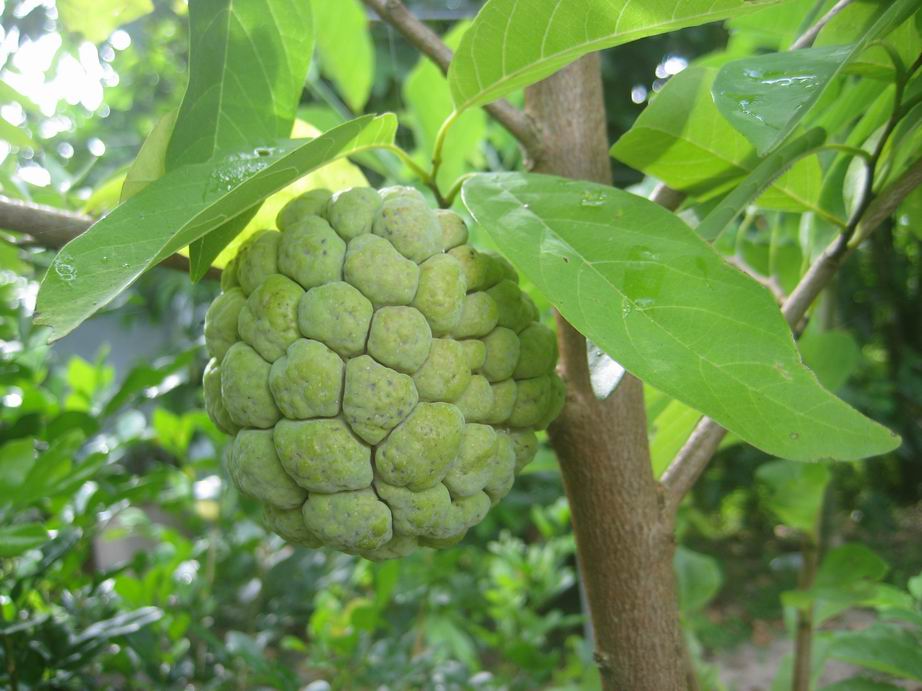
番荔枝,又名佛头果、释迦果。小乔木,半落叶,多分支。果肉乳白色,超级甜。2010年初种下的小苗,目前树龄两年半。第一次结果,两个大的,一个小的。
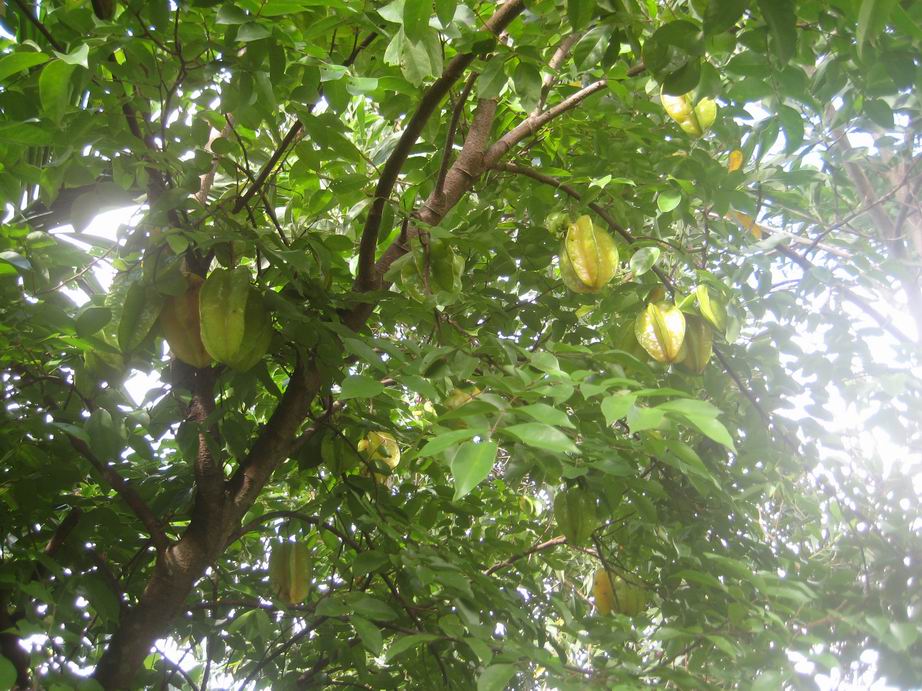
杨桃。常绿乔木,一年四季交互开花结果。杨桃有酸的树种,也有甜的树种。我这棵杨桃是甜的。2009年初种下的小苗,目前树龄三年半。杨桃第一年就可以开花结果,第一年的时候结果比较少,现在是越来越多了。
CY12-Q2 Community Analysis — OpenStack vs OpenNebula vs Eucalyptus vs CloudStack
| 发表时间:2012-07-02 09:09:19 | 评论:9 |
This article is an update version of my previous article CY12-Q1 Community Analysis — OpenStack vs OpenNebula vs Eucalyptus vs CloudStack. Readers who are intested in further discussions please contact me via email at the above-mentioned address.
A Chinese version of this article is published at the same time, which can be found at CY12-Q2 OpenStack, OpenNebula, Eucalyptus, CloudStack社区活跃度比较.
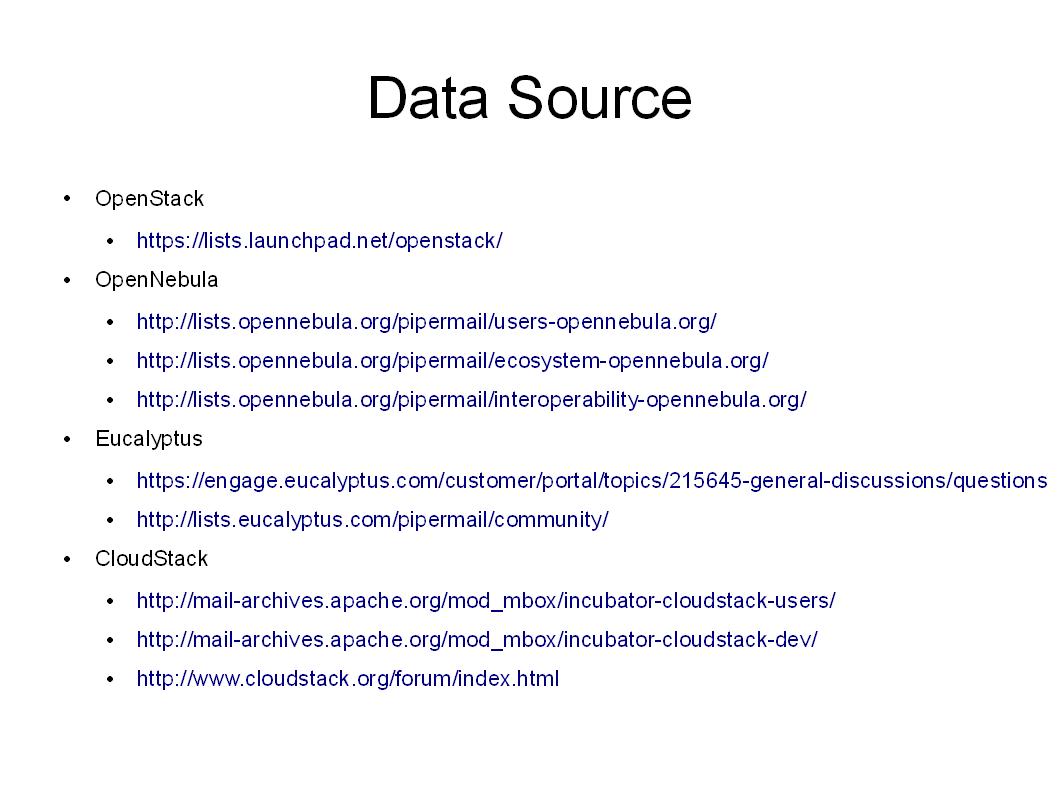
The objective of this article is to compare the OpenStack, OpenNebula, Eucalytpus and CloudStack user and developer communities, base on the communications between community members in the form of mailing lists or pubic forum discussions. The data being discussed include the total number of topics (threads), messages (posts), and participants (unique email addresses or registered members). To obtain the above-mentioned data, a Java program was written to retrieve all the forum posts and mailing list messages into a MySQL database for further processing. The analysis results were presented in the form of graphs generated by LibreOffice.
It should be noted that the Eucalyptus project replaced their original forums with a new forum which is called Engage. In addition to the Engage forum, Eucalyptus also started supporting mailing lists, which are indepedent of the Engage forum. It seems that the Engage forum is basically used for technical support, while the mailing lists focus on community discussions.
After being donated to the Apache Foundation, the CloudStack project also migrated to new forums and mailing lists.
The above-mentioned migrations might bring impacts on community activities.
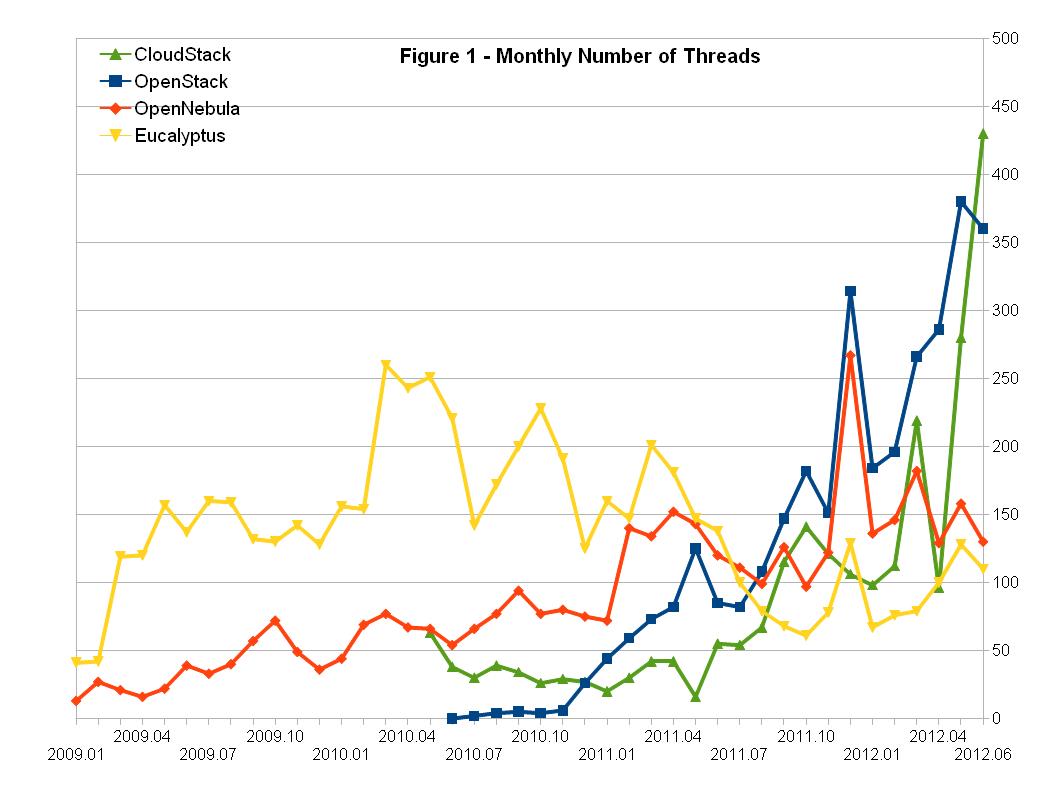
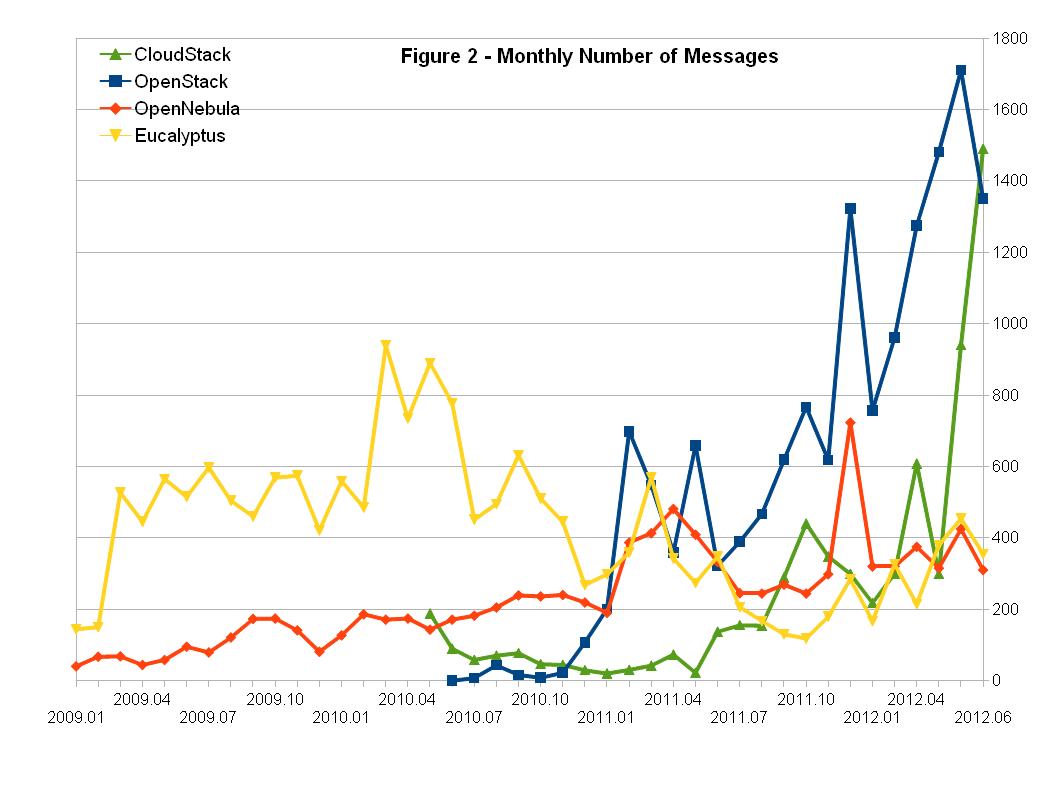
Figure 1 and 2 represent the monthly number of topics (threads) and posts (messages). During the past 3 months, discussions related to OpenStack and CloudStack increased rapidly. At the same time, OpenNebula-related discussions seem to decrease, while Eucalyptus-related discussions are growing slowly. Among the four projects being discussed, the Eucalyptus-related numbers are relatively low.
It should be noted that the CloudStack-related numbers seem to be abnormal in April. This can be attributed to their migration to the new forums and mailing lists. The May and June numbers are growing very fast, which can be considered as positive feedbacks of the donation event (in early April, the CloudStack project was donated to the Apache Foundation after being acquied by Citrix).
Eucalyptus also started their new forum and mailing lists in April. This migration did not produce much impact on community activities. This is because there exist no major changes in either engineering or marketing during the same period. Eucalyptus announced their return to the open source community in June 20, but it will take a month or so to observe any community resp0nse.
Eucalyptus and CloudStack offer both forums and mailing lists. For Eucalyptus, 1/3 of their community traffic were from the Engage forum, while the rest 2/3 were from the mailing lists. For CloudStack, only 1/5 of their community traffic were from the forums, while the rest 4/5 were from the mailing lists. Assuming the both projects were spending fairly between forums and mailing lists, it seems that mailing lists are more attractive to community members.
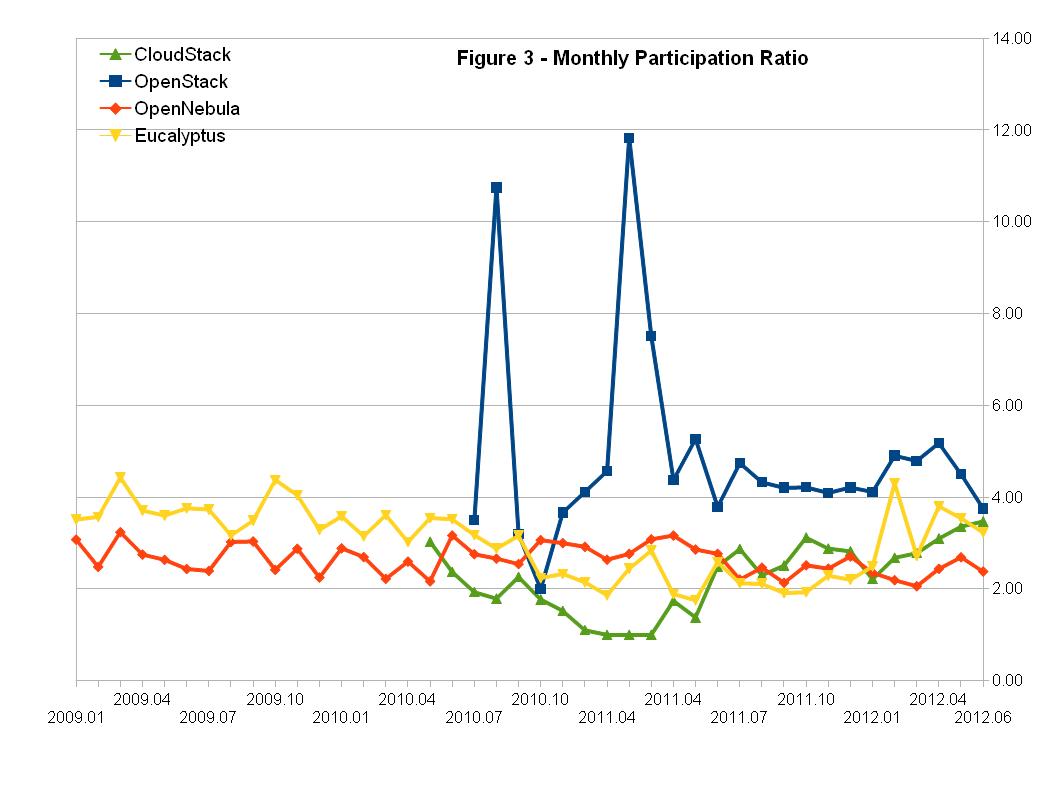
Generally speaking, the number of replies to a specific topic represents the attention being received, and the depth of discussion for that particular topic. When the number of master posts (the original post that started a particular topic) is more than the number of replies, it is safe to conclude that the participation of the forum or mailing list is very low. Therefore, the ratio between “the number of posts” and “the number of topics” represents the participation rate of an online community. In this study we call this ratio the Participatin Ratio.
During the past three months, the participation ratios of OpenNebula, Eucalyptus and CloudStack were very close. The participation ratio of OpenStack is twice as high as the other three.
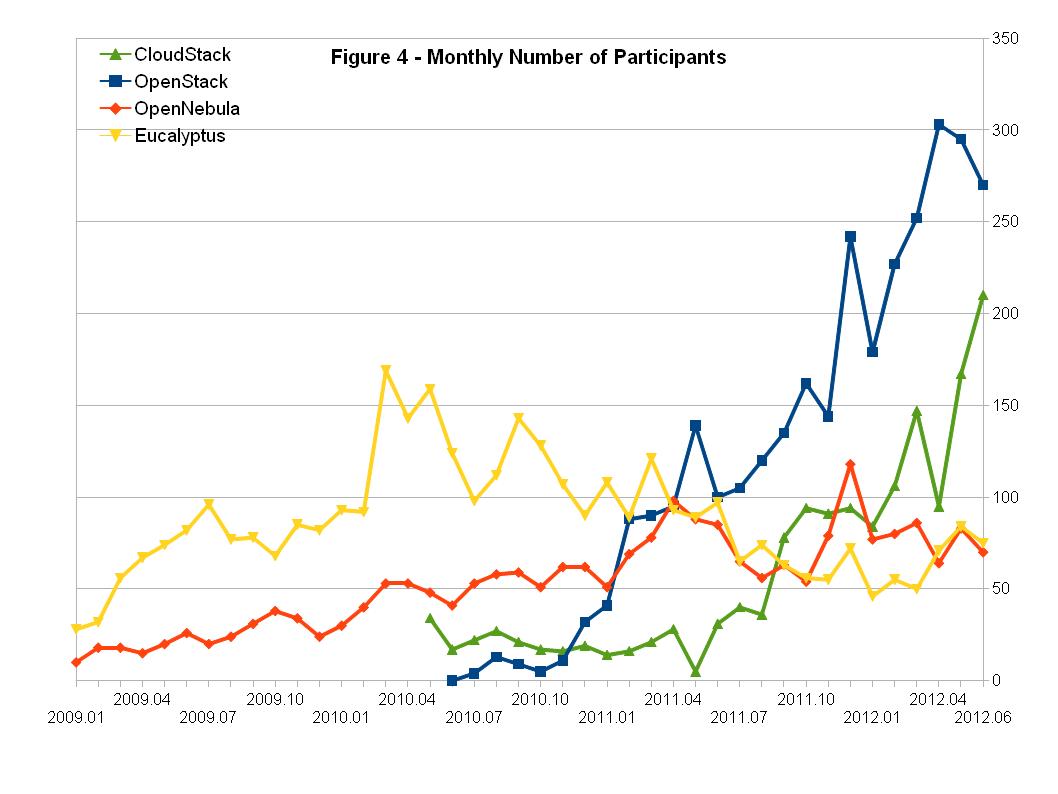
Figure 4 shows the number of monthly participants of the four projects being discussed. During the past 3 months, the CloudStack numbers were growing at the fastest pace, OpenStack and Eucalyptus were growing at a relately slower pace, while OpenNebula was declining slowly. For both Eucalyptus and OpenNebula, the number of active participants is about 1/2 of OpenStack and CloudStack.
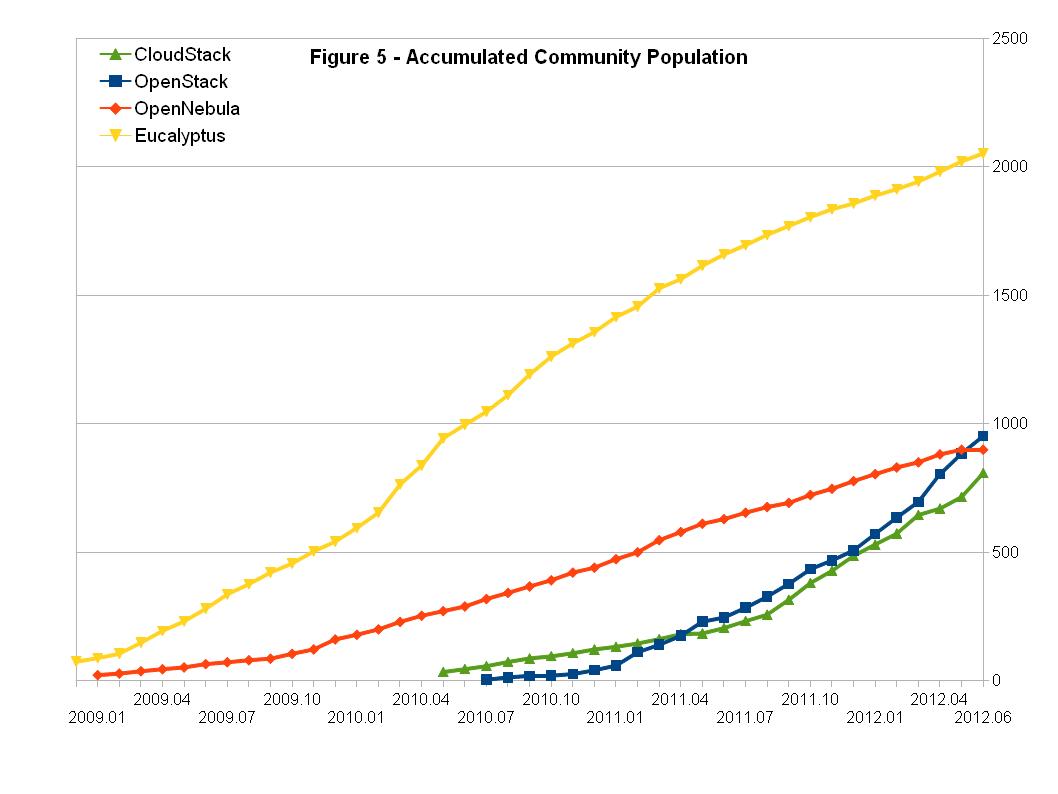
Accumulated Community Population refers to the total number of users and developers who have participated in forum or mailing list discussions. (This number does not include those who have registered into discussion forums or mailing lists but have never participated in any open discussions.) These are people who have tested or used a specific product for a while, but not necessary currently an active user. A new product release, or a promotion event, might be able to reactivate some of them.
Figure 5 shows the accumulated community populations of the four projects being discussed. The Eucalyptus project still has the biggest population, while the others three are very close. For the first time the population of OpenStack exceeded OpenNebula. Also, the population of CloudStack will exceed OpenNebula in a very short period.
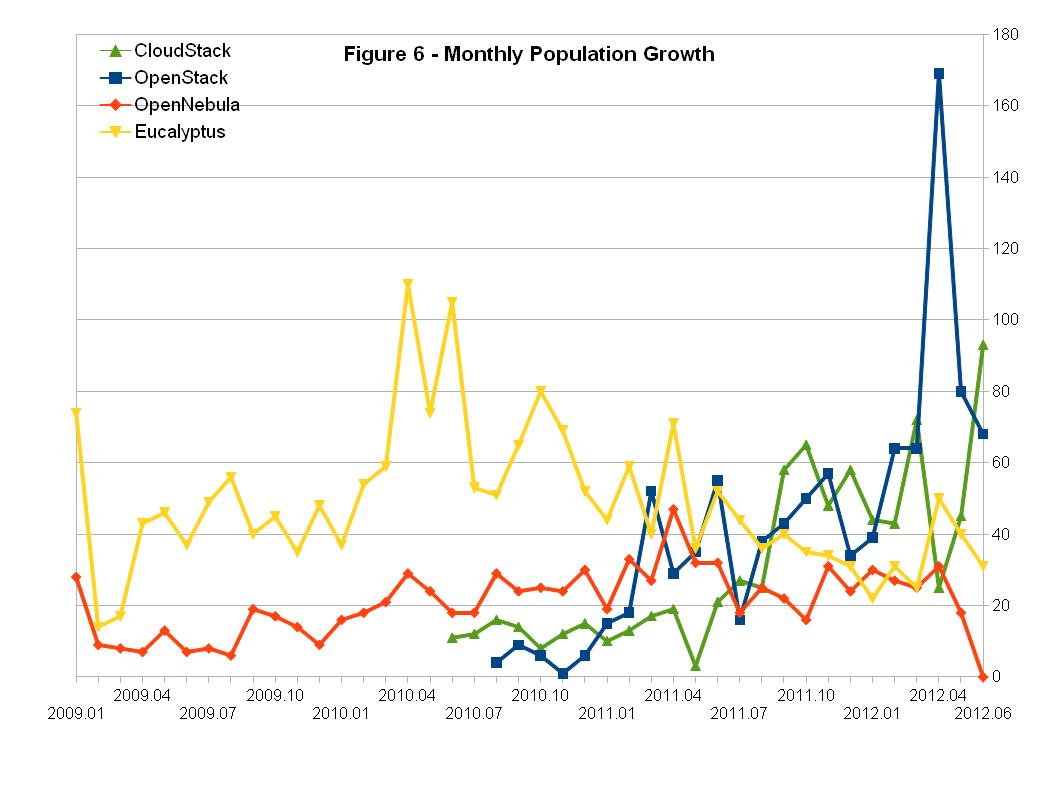
Figure 5 shows the monthly population growth of the four projects being discussed. During the past 3 months, OpenStack's population growth is much faster than the others. CloudStack is also growing at a very fast rate, while Eucalyptus and OpenNebula are relatively slow.
It should be noted that the OpenNebula project exhibited zero population growth in June.
In my previous article CY12-Q1 Community Analysis -- OpenStack vs OpenNebula vs Eucalyptus vs CloudStack, I predicted that the pouplation of OpenStack and CloudStack will exceed that of OpenNebula in 6~9 months. Because OpenNebula is growing way too slowly, OpenStack achieve this goal in only 3 months. It is expected that CloudStack will achieve the same goal in another 3 months.
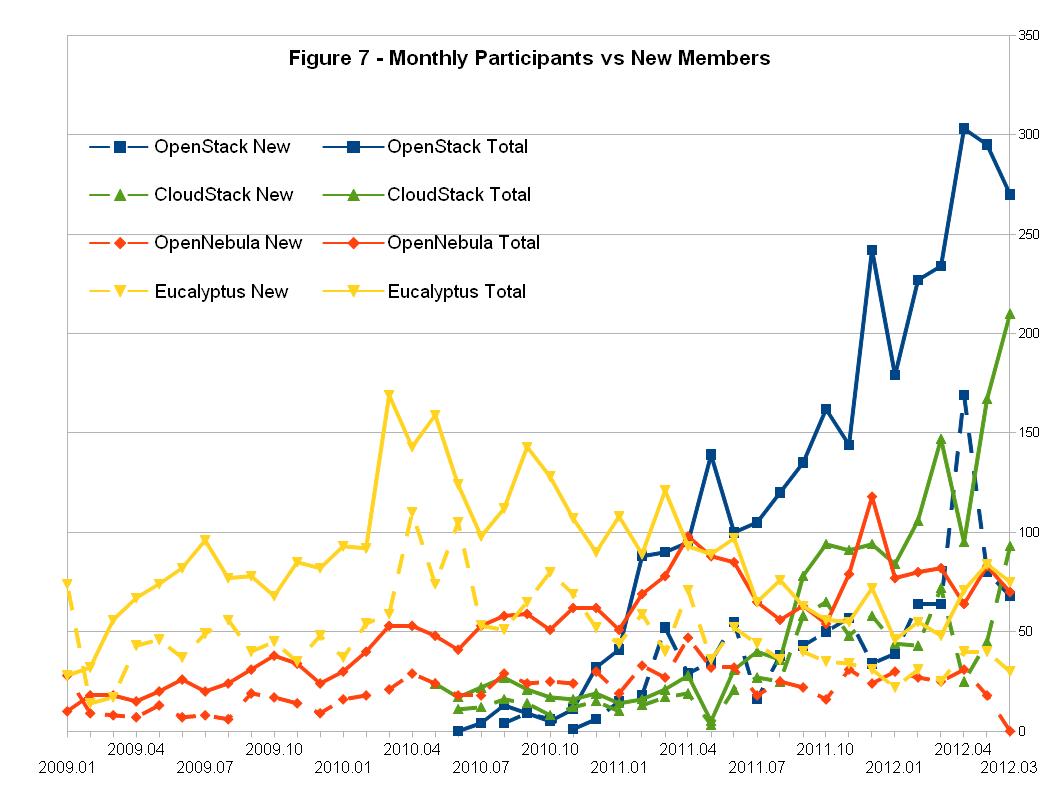
Figure 7 is a combination of Figure 4 and Figure 6. The solid lines represent the monthly participants, while the dash lines represent the monthly new members.
For OpenStack and OpenNebula, around 30% of their monthly participants are new members. For CloudStack and Eucalyptus, around 50% of their monthly participants are new members. This indicates OpenStack and OpenNebula communities are more “sticky” than CloudStack and Eucalyptus communities.
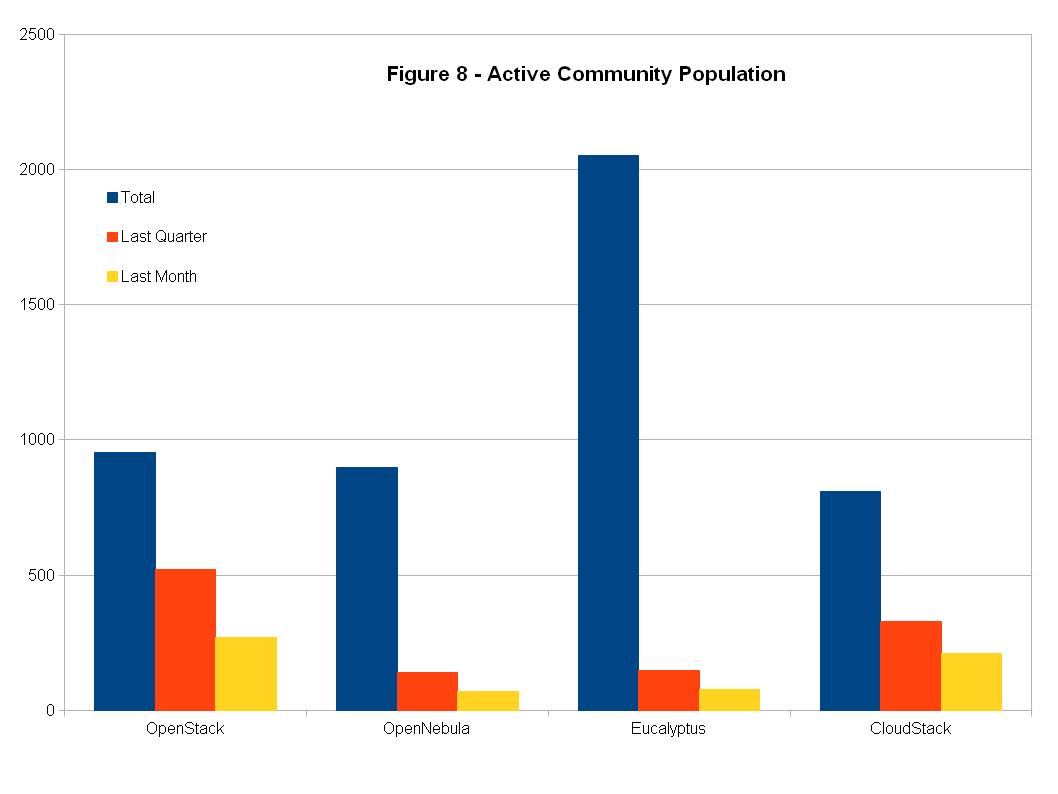
Figure 8 shows the total community population, active participants of the past quarter, and active participants of the past month, of the four projects being discussed. It can be seen that Eucalyptus has the largest population and the least number of active participants (which is at the same level as OpenNebula). For OpenStack, the active participants of the past quarter is 55% of its total population, and the active participants of the past month is 28% of its total population. For CloudStack, the active participants of the past quarter is 40% of its total population, and the active participants of the past month is 26% of its total population.
The fast growth of the OpenStack community should be attributed first to their marketing efforts. The project still lacks some important functionalities for commercial deployment (Eucalyptus and CloudStack are relatively more mature for commercial deployment in terms of functionality), the steady advertising, public relationship, marketing, and partnership efforts have earned them the most vibrant user community, which will pave the road for their future commercial success.
Citrix donated CloudStack to the Apache Foundation right after the acquisition. This has been proved to be a highly successful marketing effort.
Eucalyptus hired Greg Dekoenigsburg as its VP of Community from RedHat in October 2011. It seems that Greg DeKoenigsburg is focusing on building customer circles rather than communities. The Eucalyptus community now has a new look and feel (the Engage forum and the mailing lists), but the volume and activity of the community remain unchanged. On May 20th, Eucalyptus announced that it will return to its open source roots by combining its enterprise edition and the community edition to provide a single open source product. This strategic effort will earn Eucalyptus competitive edges in terms of functionality and commercial readiness. However, the future of Eucalyptus depends on whether the company will continously invest in building communities. Marten Mickos, the current Eucalyptus CEO, said during his tenure as the CEO of MySQL (in 2007) that success in open source requires you to serve (1) those who spend time to save money, and (2) those who spend money to save time. In an open source ecosystem, the mojarity belongs to those who spend time to save monty, and among them those who spend money to save time will emerge. At the time being, Eucalyptus did accomplish some commercial success as compared to its competitors. (And so does OpenNebula.) The problem is, should Eucalyptus continues to invest most of its resources on those who will spend money to save time (obviously potential customers), it will gradually lose those who will spend time to save money. When the volume of its active user community continues to shrink, even current paying customers will investigate the possibility of using alternative solutions.
As for the OpenNebula project, this is probably the right time to hire a full time community manager. When the project released version 3.4 on April 11th (and incremental release 3.4.1 on May 3rd), it doesn't even make a splash among the bigger cloud computing community. Considering the fact that OpenNebula is capable of maintaining an active community that is comparable to that of Eucalyptus at near zero marketing cost, it is safe to conclude that OpenNebula does meet the the requirements from a large number of cloud computing practioners in terms of both functionality and support. Should OpenNebula carry out marketing campaigns in a way that is similar to OpenStack, its community will continue to grow in terms of population and activeness.
| 更晚内容 | 更早内容 |
云与清风常拥有,
冰雪知音世难求。
击节纵歌相对笑,
案上诗书杯中酒。
2020年12月31日
洛杉矶
最新评论
2026-07-23 11:37:04
qyjohn 评论了 《几句翻译》
2026-07-21 20:11:28
wells 评论了 《几句翻译》
2025-11-15 06:29:51
qyjohn 评论了 《青桔》
2025-11-14 01:55:04
wells 评论了 《青桔》
2025-10-24 18:04:06
Ted Wang 评论了 《关于作者(About Me)》
2025-03-27 08:28:09
Max 评论了 《父亲走了》
2025-03-08 04:13:52
W 评论了 《我不想颂扬普京大帝》
2024-07-22 16:02:03
云思 评论了 《无题》
2024-06-27 10:01:54
yiming 评论了 《致访客(Welcome)》
2024-05-06 08:50:06
qyjohn 评论了 《致访客(Welcome)》
2024-05-03 19:49:00
jimmie 评论了 《致访客(Welcome)》
2024-02-19 03:32:57
林小静 评论了 《埋剑渡》
2024-01-05 03:54:28
路过者 评论了 《2023年度盘点》
2024-01-04 10:22:05
qyjohn 评论了 《致访客(Welcome)》
2024-01-04 08:05:13
qyjohn 评论了 《2023年度盘点》